Let me tell you about the morning I almost threw out a perfectly good egg.
Nothing dramatic—just breakfast. I was standing in my kitchen, half-awake, making scrambled eggs. You know the routine: crack, whisk, cook, done. Except this time, something caught my eye.
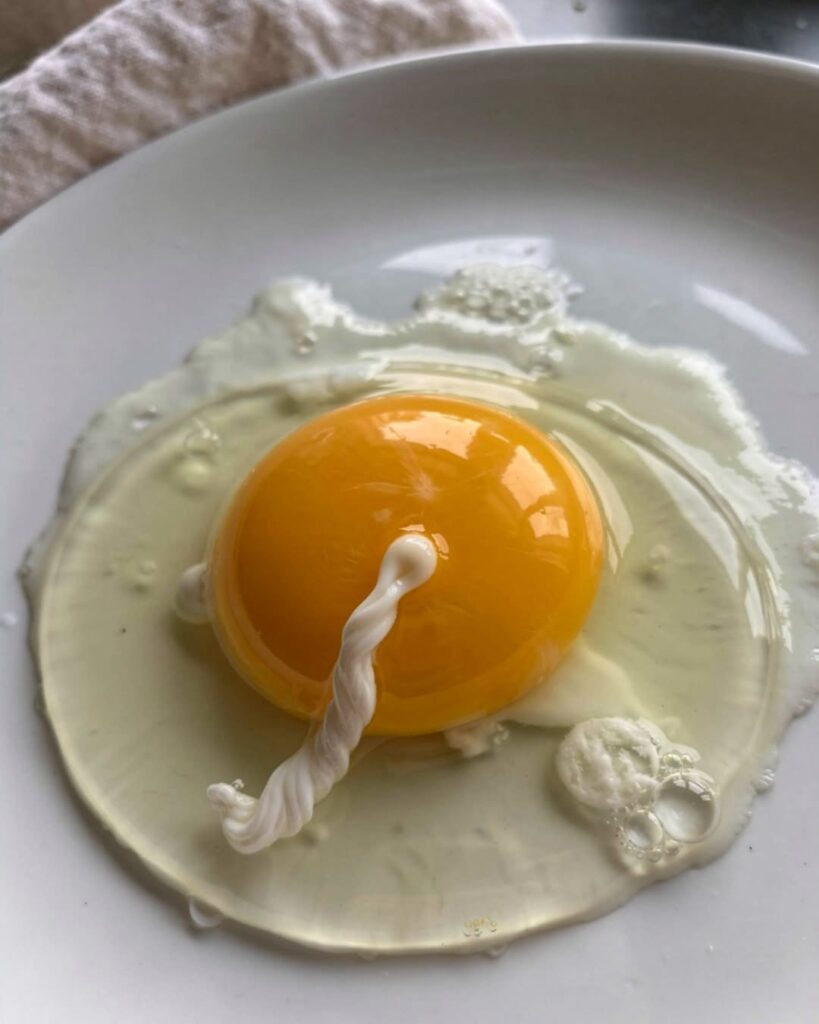
There it was. A white, stringy, slightly twisted strand floating in the egg white. It clung to the yolk like a tiny rope.
And my brain? Immediately suspicious.
What is that? Is it… alive?
I stared at it longer than I’d like to admit. Poked it with a fork. Considered tossing the whole thing and pretending I never saw it.
But curiosity got the better of me. So I did what most of us do—I looked it up.
And honestly? The answer surprised me.
What Is the White String in an Egg?
That strange little strand has a name: the chalaza, pronounced kuh-LAY-zuh. Sounds fancy, right? Like something you’d hear in a biology lecture and immediately forget.
But here’s the simple version.
The chalaza is a natural protein structure inside the egg. Its job is to keep the yolk centered—like a built-in suspension system.
Think of it like tiny anchor ropes. They hold the yolk steady so it doesn’t bump into the shell and break. Kind of like a seatbelt, but for your breakfast.
It’s made of the same protein as egg white. It’s completely normal. Completely edible.
And here’s the twist—something I definitely didn’t expect:
The more visible the chalaza is, the fresher the egg usually is.
Yeah. That “weird” thing I almost threw out? It was actually a sign of quality.