For thousands of years, people across cultures have stored drinking water in copper vessels, believing the metal offered unique health benefits. Today, this age-old practice is gaining attention once again. But how much of what you’ve heard is supported by science, and how much is traditional belief?
Let’s explore the fascinating story behind copper-infused water.
Why Store Water in a Copper Vessel?
Copper is more than just a beautiful metal. It has long been recognized for its natural antimicrobial properties. When clean drinking water is stored in a pure, unlined copper container for several hours—typically overnight—tiny amounts of copper ions are released into the water.
This traditional practice, known in Ayurveda as Tamra Jal, has been followed for centuries as a simple way to store and preserve drinking water.
Copper’s Natural Purifying Power
One of copper’s most impressive characteristics is its ability to help reduce harmful microorganisms.
Scientific studies have shown that copper surfaces can destroy many types of bacteria, viruses, and fungi by damaging their cell membranes and genetic material. This antimicrobial effect is one reason copper has been used in hospitals, water systems, and food preparation equipment.
When water is stored in a clean copper vessel, the metal may help reduce certain microbes that could be present in the water. However, it’s important to remember that copper water is not a replacement for proper water filtration or treatment, especially if the water source is unsafe.
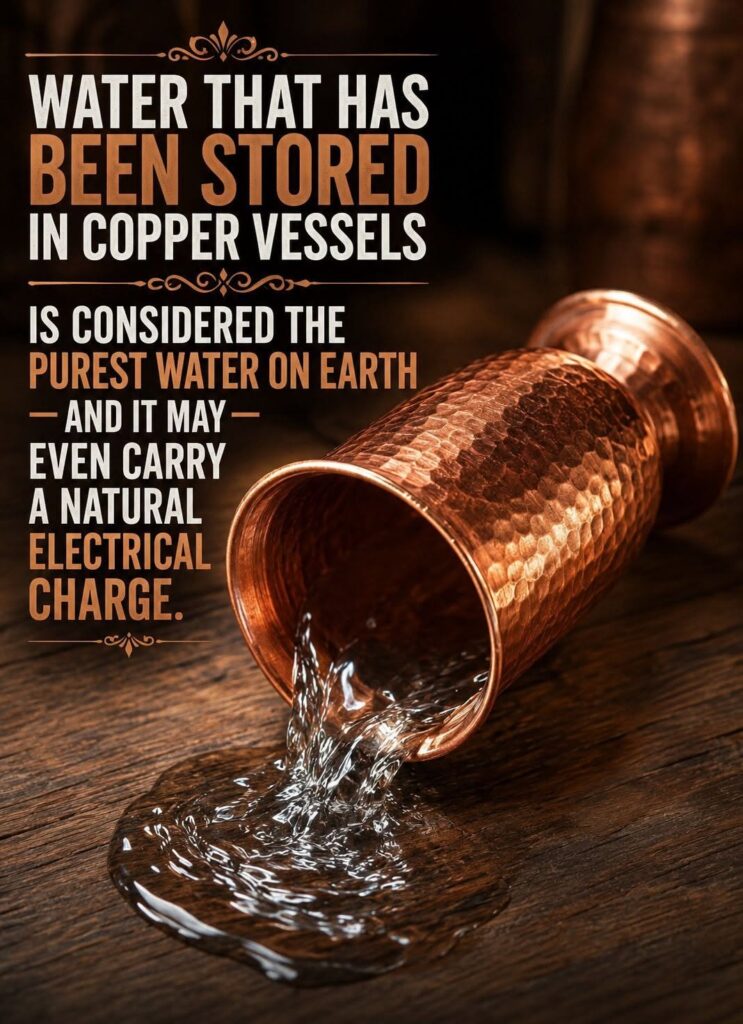
Does Copper Water Become “Electrically Charged”?
Many social media posts claim that water stored in copper becomes “electrified” or gains a special energy that powers your body’s cells.
While copper is indeed an excellent conductor of electricity, there is no scientific evidence that resting water in a copper vessel creates a meaningful electric charge that provides unique health benefits when consumed.
What does happen is much simpler:
- Small amounts of copper ions dissolve into the water.
- These trace minerals can contribute to your daily copper intake.
- The water’s taste may become smoother or slightly sweeter to some people.
The idea of “living water” or “bio-electric water” remains a concept found mainly in traditional wellness practices rather than established scientific research.
The Role of Copper in the Human Body
Copper is an essential trace mineral that your body needs in small amounts every day.
It plays an important role in:
- Supporting normal immune function
- Helping produce red blood cells
- Assisting in collagen formation for healthy skin and joints
- Supporting energy production inside cells
- Acting as a cofactor for important antioxidant enzymes
- Maintaining healthy nerves and connective tissues
Because copper is essential, consuming small, safe amounts through food or water can contribute to overall health.
How to Prepare Copper Water
If you’d like to try this traditional practice, follow these simple steps: