- Pumpkin Spice Mocha Oatmeal Cake
- Fall Spice Chicken Enchilada Soup
- Spiced Cake with Cream Cheese Frosting
- Mango Muffins
- Air Fryer Cod Recipe: Crispy, Flaky, and Perfect Every Time 🐟✨
- Easy Cream Puffs That Turn Any Moment Into a Celebration
- FAMOUS RED LOBSTER SHRIMP RECIPE
- Crispy Air Fryer Cod That’s Golden, Flaky, and Irresistible
- Loaded Potato Soup That’s Creamy, Cozy, and Completely Satisfying
- Best Easy Sheet Pan Scored Potatoes Recipe for Crispy Perfection
- Throw Raw Russet Potato Slices Into the Slow Cooker and Watch Dinner Disappear
- Old Fashioned Pancakes Recipe: Fluffy, Golden, and Comforting

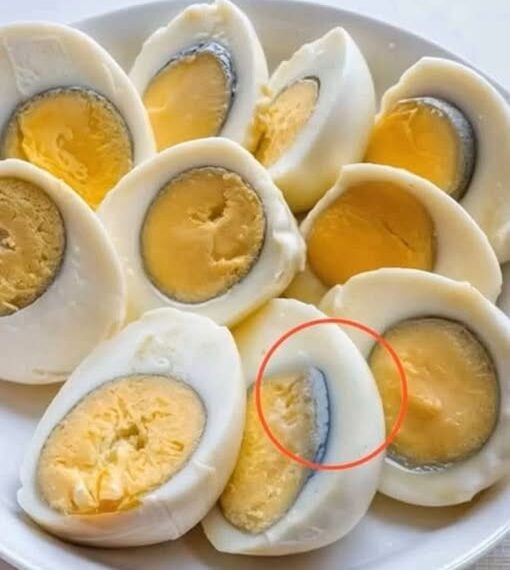
What Causes the Green Ring Around Hard-Boiled Eggs?
June 24, 2026 by Anna Keith Leave a Comment
You peel a hard-boiled egg, slice it in half, and there it is—a grayish-green ring circling the yolk.
For many people, that unusual color raises immediate questions.
Is the egg spoiled?
Was it cooked incorrectly?
Is it still safe to eat?
The good news is that the green ring is completely harmless.
In fact, it’s one of the most common and well-understood changes that can occur when eggs are cooked.
The ring isn’t a sign of contamination or poor quality. Instead, it’s simply the result of a natural chemical reaction that happens when eggs are exposed to heat for too long or at temperatures that are too high.
Let’s explore exactly why it happens, whether it affects nutrition, and how you can prevent it if you prefer perfectly yellow yolks.
🔬 The Science Behind the Green Ring
The greenish-gray ring forms because of a reaction between two naturally occurring substances found inside eggs.
| Compound | Location in Egg | Role |
|---|---|---|
| Iron | Yolk | Reacts during cooking |
| Sulfur | Egg white | Released when heated |
When eggs are heated, proteins begin to break down.
As the egg white cooks, sulfur-containing compounds release hydrogen sulfide gas.
This gas naturally moves toward the yolk.
Inside the yolk, hydrogen sulfide encounters iron.
The two combine to form a compound called ferrous sulfide, which appears as a gray-green layer around the outside of the yolk.