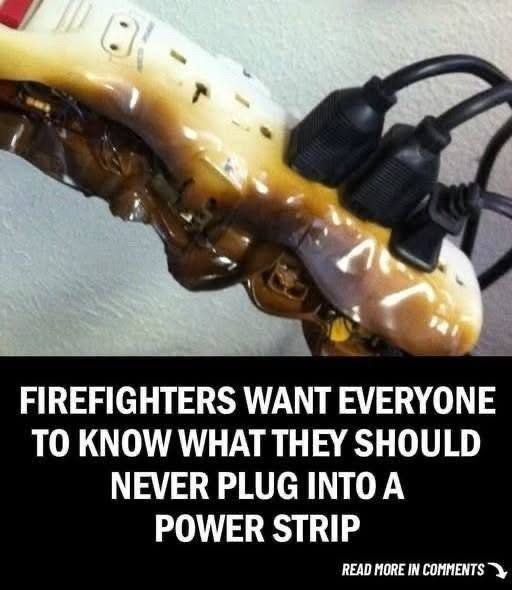
Power strips are convenient. They allow you to connect several electronic devices to one wall outlet, making them especially useful around desks, entertainment centers and home offices. But a power strip is not designed to safely handle every appliance in your home.
One of the biggest mistakes people make is assuming that because a device fits into a power strip, it is safe to use it there. High-power appliances can draw enough electricity to overload the strip, overheat the wiring and potentially start a fire.
The most important rule is simple: if an appliance produces significant heat or requires a large amount of electricity, check the manufacturer’s instructions and consider plugging it directly into a properly rated wall outlet.
Space heaters are among the clearest examples. The U.S. Consumer Product Safety Commission advises consumers to plug electric space heaters directly into a wall outlet and never into a power strip or extension cord. Portable heaters are associated with thousands of fires over time, making this a particularly important safety precaution.
Microwave ovens should also generally be connected directly to a suitable wall outlet rather than sharing a power strip with multiple devices. Microwaves can draw substantial power while operating, and adding other high-demand appliances to the same strip can increase the risk of overload.
Refrigerators and freezers are another category that deserves caution. These appliances have compressors that cycle on and off and may require a significant amount of power when starting. Follow the manufacturer’s electrical requirements and, when possible, use a dedicated wall outlet rather than a crowded power strip.
Large cooking appliances such as toaster ovens, electric grills, air fryers and electric frying pans can also consume considerable power. Although the exact electrical requirements vary by model, these appliances should not be casually connected to a power strip simply because there is an available socket.
Coffee makers and electric kettles deserve attention as well. They use heating elements that can require substantial electrical power. Plugging several heating appliances into one power strip at the same time can create an unnecessary overload.
Hair dryers and curling irons can also be surprisingly demanding. A hair dryer in particular can draw substantial power, so using it directly from an appropriate wall outlet is generally the safer choice.
Washing machines and clothes dryers should be connected according to the manufacturer’s installation requirements. These appliances should not be connected to an ordinary household power strip as a convenient way of extending their reach.
Air conditioners, particularly portable and window units, are another appliance where electrical requirements matter. Follow the manufacturer’s instructions and use the appropriate outlet and circuit. Do not assume that a standard power strip is sufficient simply because the plug fits.
Another dangerous practice is plugging one power strip into another. This is sometimes called “daisy chaining.” It can increase the electrical load on the first strip and create a dangerous situation. Fire-safety guidance recommends avoiding this practice and using a properly installed wall receptacle instead.
You should also pay attention to the condition of the power strip itself. If it is cracked, melted, discolored, unusually hot, sparking or has a damaged cord, stop using it and replace it. A power strip showing signs of overheating should never be treated as something that can simply be repaired with tape.
It is also important to avoid covering power strips with rugs, blankets or furniture. Electrical equipment needs appropriate ventilation, and damaged or overheated equipment can become a fire hazard.
Not every device needs to be plugged directly into a wall outlet. Low-power electronics such as phone chargers, computers, lamps and small entertainment devices are commonly used with properly rated power strips. The key is understanding the difference between low-power electronics and appliances that use heating elements, motors or substantial electrical loads.
Always check the rating printed on the power strip and compare it with the electrical requirements of the devices you intend to connect. Never exceed the strip’s rated capacity.
A power strip should be treated as a convenience for distributing power—not as a replacement for permanent household wiring.
One final warning is especially important: never ignore a power strip that becomes hot, smells like burning plastic, makes crackling sounds or shows discoloration. Unplug it safely if you can do so without touching damaged or exposed electrical components, and replace it. The CPSC has also issued recent warnings and recalls involving certain power strips that posed fire risks when overloaded.
The safest habit is simple: use power strips for appropriate low-power electronics, keep high-power appliances on properly rated wall outlets, avoid daisy chaining, and replace damaged electrical equipment immediately.
A few seconds of checking where an appliance is plugged in can prevent overheating, electrical damage and potentially a devastating house fire.