- Pumpkin Spice Mocha Oatmeal Cake
- Fall Spice Chicken Enchilada Soup
- Spiced Cake with Cream Cheese Frosting
- Mango Muffins
- Air Fryer Cod Recipe: Crispy, Flaky, and Perfect Every Time 🐟✨
- Easy Cream Puffs That Turn Any Moment Into a Celebration
- FAMOUS RED LOBSTER SHRIMP RECIPE
- Crispy Air Fryer Cod That’s Golden, Flaky, and Irresistible
- Loaded Potato Soup That’s Creamy, Cozy, and Completely Satisfying
- Best Easy Sheet Pan Scored Potatoes Recipe for Crispy Perfection
- Throw Raw Russet Potato Slices Into the Slow Cooker and Watch Dinner Disappear
- Old Fashioned Pancakes Recipe: Fluffy, Golden, and Comforting

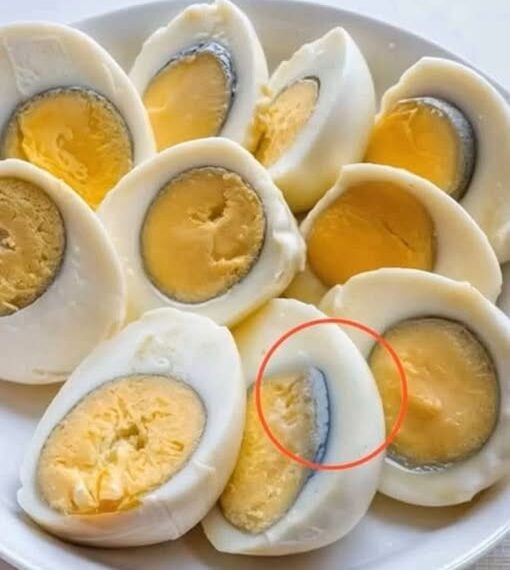
What Causes the Green Ring Around Hard-Boiled Eggs?
June 24, 2026 by Anna Keith Leave a Comment
The Reaction in Simple Terms
- Egg whites release sulfur when heated.
- Sulfur travels toward the yolk.
- Sulfur reacts with iron in the yolk.
- A green-gray ring forms where the two meet.
It’s a completely natural process.
🥚 Why Some Eggs Develop a Ring and Others Don’t
Not every hard-boiled egg develops a green ring.
The biggest factors are:
Overcooking
The longer an egg cooks, the more sulfur is released.
More sulfur means a greater chance of the reaction occurring.
High Cooking Temperatures
Boiling eggs aggressively increases the likelihood of ring formation.
Gentler cooking reduces the reaction.
Slow Cooling
If eggs remain hot after cooking, the reaction continues.
Rapid cooling helps stop the process.
✅ Is the Green Ring Safe to Eat?
Absolutely.
The green ring is:
- Non-toxic
- Harmless
- Completely edible
- Common in home kitchens
Many professional chefs and food scientists view it simply as a cosmetic issue.
Does It Affect Nutrition?
No.
The egg still contains:
- Protein
- Vitamins
- Minerals
- Healthy fats
The nutritional value remains essentially unchanged.
Does It Affect Flavor?
Usually only slightly.
Overcooked eggs may develop a stronger sulfur aroma or taste, but the green ring itself doesn’t significantly change flavor.
👃 Why Do Overcooked Eggs Sometimes Smell Stronger?
Many people associate eggs with a sulfur smell.
That’s because sulfur-containing compounds naturally occur in egg whites.
When eggs are overcooked:
- More sulfur compounds are released.
- The smell becomes more noticeable.
- Flavor may become slightly stronger.
This is related to the same chemical reaction responsible for the green ring.
🧊 How to Prevent the Green Ring
If you’d like bright yellow yolks without the green border, a few simple cooking techniques can help.
Method 1: Avoid Vigorous Boiling
Instead of boiling eggs aggressively:
- Place eggs in a saucepan.
- Cover with cold water.
- Bring water to a gentle boil.
- Remove from heat.
- Cover the pan.
Allow eggs to finish cooking in the hot water rather than continuing to boil.
Method 2: Watch the Timing
For large eggs:
| Desired Texture | Approximate Time |
| Soft-boiled | 6–7 minutes |
| Medium-boiled | 8–10 minutes |
| Hard-boiled | 10–12 minutes |
Cooking significantly longer increases the risk of ring formation.
Method 3: Use an Ice Bath
Immediately after cooking:
- Transfer eggs to a bowl of ice water.
- Let them cool for 5–10 minutes.
Rapid cooling helps stop the sulfur-iron reaction.
This is one of the most effective prevention methods.
🍳 Best Method for Perfect Hard-Boiled Eggs
Many cooks use the following foolproof technique:
Ingredients
- Large eggs
- Water
- Ice
Instructions
- Place eggs in a single layer in a saucepan.
- Cover with cold water by about one inch.
- Bring water to a boil.
- Turn off heat immediately.
- Cover the pan.
- Let sit for 10–12 minutes.
- Transfer eggs to ice water.
- Cool completely before peeling.
This method often produces yolks that are bright yellow and free from green discoloration.
🥗 Does Egg Freshness Matter?
- Pumpkin Spice Mocha Oatmeal Cake
- Fall Spice Chicken Enchilada Soup
- Spiced Cake with Cream Cheese Frosting
- Mango Muffins
- Air Fryer Cod Recipe: Crispy, Flaky, and Perfect Every Time 🐟✨
- Easy Cream Puffs That Turn Any Moment Into a Celebration
- FAMOUS RED LOBSTER SHRIMP RECIPE
- Crispy Air Fryer Cod That’s Golden, Flaky, and Irresistible
- Loaded Potato Soup That’s Creamy, Cozy, and Completely Satisfying
- Best Easy Sheet Pan Scored Potatoes Recipe for Crispy Perfection
- Throw Raw Russet Potato Slices Into the Slow Cooker and Watch Dinner Disappear
- Old Fashioned Pancakes Recipe: Fluffy, Golden, and Comforting
What Causes the Green Ring Around Hard-Boiled Eggs?
June 24, 2026 by Anna Keith Leave a Comment
The Reaction in Simple Terms
- Egg whites release sulfur when heated.
- Sulfur travels toward the yolk.
- Sulfur reacts with iron in the yolk.
- A green-gray ring forms where the two meet.
It’s a completely natural process.
🥚 Why Some Eggs Develop a Ring and Others Don’t
Not every hard-boiled egg develops a green ring.
The biggest factors are:
Overcooking
The longer an egg cooks, the more sulfur is released.
More sulfur means a greater chance of the reaction occurring.
High Cooking Temperatures
Boiling eggs aggressively increases the likelihood of ring formation.
Gentler cooking reduces the reaction.
Slow Cooling
If eggs remain hot after cooking, the reaction continues.
Rapid cooling helps stop the process.
✅ Is the Green Ring Safe to Eat?
Absolutely.
The green ring is:
- Non-toxic
- Harmless
- Completely edible
- Common in home kitchens
Many professional chefs and food scientists view it simply as a cosmetic issue.
Does It Affect Nutrition?
No.
The egg still contains:
- Protein
- Vitamins
- Minerals
- Healthy fats
The nutritional value remains essentially unchanged.
Does It Affect Flavor?
Usually only slightly.
Overcooked eggs may develop a stronger sulfur aroma or taste, but the green ring itself doesn’t significantly change flavor.
👃 Why Do Overcooked Eggs Sometimes Smell Stronger?
Many people associate eggs with a sulfur smell.
That’s because sulfur-containing compounds naturally occur in egg whites.
When eggs are overcooked:
- More sulfur compounds are released.
- The smell becomes more noticeable.
- Flavor may become slightly stronger.
This is related to the same chemical reaction responsible for the green ring.
🧊 How to Prevent the Green Ring
If you’d like bright yellow yolks without the green border, a few simple cooking techniques can help.
Method 1: Avoid Vigorous Boiling
Instead of boiling eggs aggressively:
- Place eggs in a saucepan.
- Cover with cold water.
- Bring water to a gentle boil.
- Remove from heat.
- Cover the pan.
Allow eggs to finish cooking in the hot water rather than continuing to boil.
Method 2: Watch the Timing
For large eggs:
| Desired Texture | Approximate Time |
| Soft-boiled | 6–7 minutes |
| Medium-boiled | 8–10 minutes |
| Hard-boiled | 10–12 minutes |
Cooking significantly longer increases the risk of ring formation.
Method 3: Use an Ice Bath
Immediately after cooking:
- Transfer eggs to a bowl of ice water.
- Let them cool for 5–10 minutes.
Rapid cooling helps stop the sulfur-iron reaction.
This is one of the most effective prevention methods.
🍳 Best Method for Perfect Hard-Boiled Eggs
Many cooks use the following foolproof technique:
Ingredients
- Large eggs
- Water
- Ice
Instructions
- Place eggs in a single layer in a saucepan.
- Cover with cold water by about one inch.
- Bring water to a boil.
- Turn off heat immediately.
- Cover the pan.
- Let sit for 10–12 minutes.
- Transfer eggs to ice water.
- Cool completely before peeling.
This method often produces yolks that are bright yellow and free from green discoloration.
🥗 Does Egg Freshness Matter?
Freshness has only a minor impact on ring formation.
The primary factors remain:
- Cooking time
- Temperature
- Cooling speed
However, slightly older eggs are often easier to peel than extremely fresh eggs.
🍽️ Common Myths About Green-Ringed Eggs
Myth: The Egg Is Spoiled
False.
Spoiled eggs usually develop:
- Strong unpleasant odors
- Unusual textures
- Discoloration throughout the egg
A green ring alone is not a sign of spoilage.
Myth: The Egg Is Unsafe
False.
Ferrous sulfide is harmless and naturally formed during cooking.
Myth: The Nutrients Are Destroyed
False.
The egg remains highly nutritious.
Myth: Green Yolks Mean Poor-Quality Eggs
False.
The ring is caused by cooking conditions, not egg quality.
Frequently Asked Questions
Why does the ring only appear around the yolk?
That’s where the sulfur from the white meets the iron in the yolk.
Can I still use green-ringed eggs for recipes?
Yes. They are perfectly safe for:
- Egg salad
- Deviled eggs
- Sandwiches
- Salads
- Meal prep
Do restaurant eggs ever get green rings?
Yes. Professional kitchens occasionally overcook eggs as well.
Does refrigeration cause the ring?
No. The ring forms during cooking, not storage.
Is there any health risk?
No. The green ring poses no health concerns.
Final Thoughts
That gray-green ring around a hard-boiled egg yolk may look unusual, but it’s simply a harmless chemical reaction between sulfur in the egg white and iron in the yolk.
It’s most likely to occur when eggs are overcooked or cooled too slowly, and while it may affect appearance, it doesn’t affect safety or nutrition in any meaningful way.
If you prefer perfectly golden yolks, use gentle cooking methods and cool your eggs quickly in ice water after cooking.
Otherwise, there’s no reason to worry.
The next time you spot that green ring, you’ll know it’s not a sign of a bad egg—it’s just a little chemistry lesson hiding inside your breakfast.