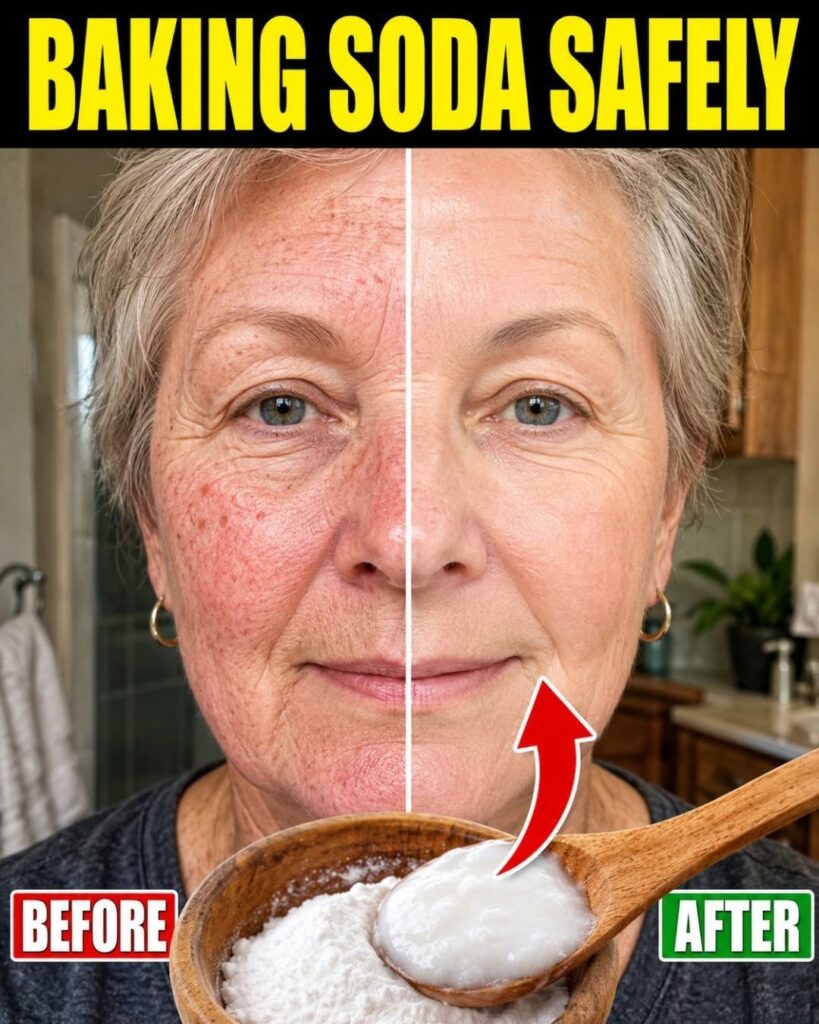
Baking soda is a common household ingredient that has become popular in DIY skincare. Many people claim it can brighten skin, reduce oil, and smooth rough patches. While baking soda may provide temporary exfoliation, it’s not a proven treatment for wrinkles, acne, or dark spots, and using it too often can do more harm than good.
Here’s what you should know before trying it.
Why Do People Use Baking Soda on Their Skin?
Baking soda (sodium bicarbonate) has a fine texture that can help remove dead skin cells from the surface of the skin. Some people also use it to absorb excess oil.
However, baking soda has a high pH (around 8–9), while healthy skin is naturally slightly acidic (around pH 4.5–5.5). Frequent use can disrupt the skin’s protective barrier.
Possible Benefits
1. Gentle Exfoliation
A mild baking soda paste may help remove surface dead skin cells, leaving the skin feeling smoother.
2. Temporary Oil Control
People with oily skin may notice less shine after using baking soda, although the effect is temporary.
3. Softer Skin
Occasional exfoliation can make rough areas feel softer, especially around the nose and chin.