- Pumpkin Spice Mocha Oatmeal Cake
- Fall Spice Chicken Enchilada Soup
- Spiced Cake with Cream Cheese Frosting
- Mango Muffins
- Air Fryer Cod Recipe: Crispy, Flaky, and Perfect Every Time 🐟✨
- Easy Cream Puffs That Turn Any Moment Into a Celebration
- FAMOUS RED LOBSTER SHRIMP RECIPE
- Crispy Air Fryer Cod That’s Golden, Flaky, and Irresistible
- Loaded Potato Soup That’s Creamy, Cozy, and Completely Satisfying
- Best Easy Sheet Pan Scored Potatoes Recipe for Crispy Perfection
- Throw Raw Russet Potato Slices Into the Slow Cooker and Watch Dinner Disappear
- Old Fashioned Pancakes Recipe: Fluffy, Golden, and Comforting

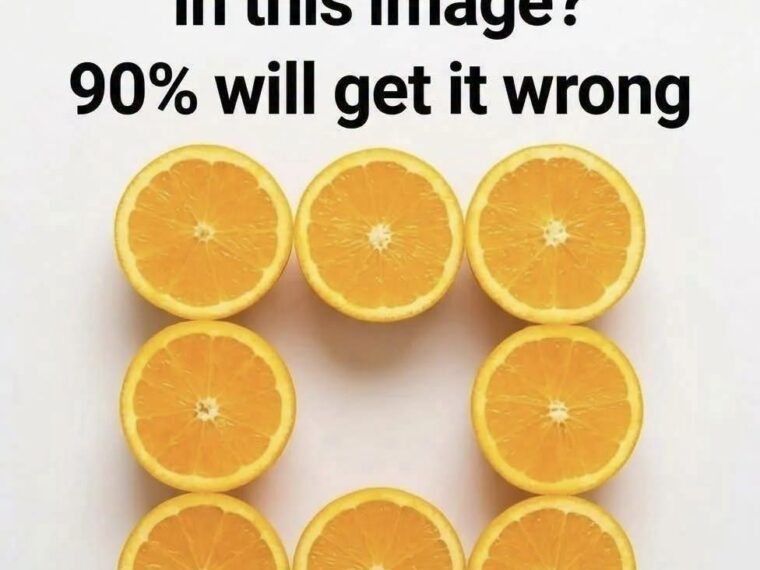
The Viral Orange Puzzle That’s Breaking the Internet—and the Surprising Truth Behind the Answer
August 3, 2026 by Anna Keith Leave a Comment
The human brain loves shortcuts. When we see a familiar object, we identify it almost instantly without carefully examining every detail.
That ability helps us move through daily life efficiently. We don’t need to study every chair before sitting down or analyze every cup before taking a drink.
However, visual puzzles use that efficiency against us.
When an image contains a neat arrangement of oranges, the brain often performs a rapid estimate rather than a careful count. It recognizes the overall group and produces an answer that feels right.
Unfortunately, feeling certain and being correct are not always the same thing.
The First-Glance Trap
Most people begin by counting the obvious, fully visible oranges.
That method works only when:
- Every orange appears separately.
- None are hidden behind another.
- No partial fruit appears near the edge.
- The image contains no duplicated or edited objects.
- The question asks only for visible whole oranges.
Viral puzzles often violate at least one of these conditions.
Why Confidence Causes Mistakes
Once people settle on an answer, they tend to defend it. Psychologists call this confirmation bias: we naturally search for evidence that supports what we already believe.
Someone who initially counts 10 oranges may keep seeing 10, even after another person points out a partially hidden fruit.
That is why the best puzzle solvers deliberately question their first answer.
The Most Common Hidden Tricks
Not every version of the viral orange puzzle uses the same image. Some show stacked fruit, while others include reflections, slices, shadows, or repeated graphics.
Therefore, the exact answer depends on the original picture.
However, most versions rely on a small number of familiar tricks.
Overlapping Oranges
One orange may sit partly behind another, leaving only a curved section visible.
Because the brain focuses on complete objects, it may treat the visible portion as part of the orange in front rather than a separate fruit.
To avoid this mistake, trace every outer curve carefully.
Ask yourself:
- Does this curve belong to the fruit in front?
- Is there another complete outline behind it?
- Could the arrangement physically contain another orange?
Partial Fruit at the Edges
A puzzle may crop an orange at the top, bottom, or side of the image.
This creates an important question: should a partially visible orange count as one orange?
If the question asks, “How many oranges are in the picture?” then a cropped orange may still represent one whole fruit.
If it asks, “How many complete oranges can you see?” then it should not count.
The wording determines the answer.
Orange Slices or Halves
Some puzzles include whole oranges alongside halves, wedges, or peeled sections.
A solver must decide whether to count:
- Physical pieces
- Original whole-fruit equivalents
- Every visible orange-colored object
- Only intact oranges
For example, two orange halves may represent one whole orange but remain two visible pieces.
Both answers can sound reasonable unless the question defines the counting rule.
Reflections and Printed Images
A mirror, phone screen, label, or photograph inside the puzzle may display additional oranges.
Should those count?
Usually, a reflection is not another physical orange. However, it is another visible image of an orange.
Once again, the answer depends on whether the puzzle asks about real fruit or visible representations.
Copy-and-Paste Editing
Digital puzzles sometimes duplicate the same fruit image several times.
You may notice:
- Identical highlights
- Matching marks on the peel
- Repeated shadows
- Exactly matching stems
- The same rotation and size
This does not necessarily change the number of pictured oranges, but it reveals that the arrangement may be digitally constructed rather than photographed.
That matters when people begin making assumptions about hidden layers or realistic stacking.
How to Solve the Puzzle Properly
Instead of staring at the entire image, use a systematic method.
Read the Exact Question
Before counting anything, examine the wording.
Possible questions include:
- How many oranges are there?
- How many oranges can you see?
- How many complete oranges are visible?
- How many pieces of orange appear?
- How many real oranges are in the photograph?
These sentences do not necessarily ask the same thing.
Count in Rows or Sections
Divide the image mentally into smaller areas.
For example:
- Count the top row.
- Count the middle section.
- Count the bottom row.
- Inspect every edge.
- Check behind overlapping fruit.
This prevents your eyes from bouncing around and counting the same object twice.
Mark Each Object
When solving on a phone or computer, take a screenshot and place a small number over each orange.
Numbering the objects makes duplicate counting much less likely.
Check for Partial Shapes
Inspect:
- Corners
- Narrow gaps
- Shadows
- Areas behind leaves
- Spaces between fruit
A small visible curve may belong to an overlooked orange.
Recount in a Different Direction
After counting from left to right, count again from right to left.
If both totals match, your answer becomes more reliable.
Why Different People See Different Answers
When several answers appear in the comments, it does not always mean most people lack basic counting skills.
They may simply be using different assumptions.
One person may count every visible fruit image. Another may count only complete physical oranges. A third may convert halves into whole-fruit equivalents.
Without clearly defined rules, more than one answer may be defensible.
Ambiguity Drives Engagement
Many viral puzzles are intentionally vague.
A clear question produces a quick answer and little discussion. An ambiguous one produces hundreds of comments, corrections, arguments, and shares.
That engagement helps the post travel farther across social platforms.
In other words, confusion may be part of the design.
“Most People Get It Wrong” Is Usually Marketing
Claims such as “90% fail” or “only geniuses solve this” rarely come with real data.
They exist to:
- Challenge your pride
- Encourage you to comment
- Make you look twice
- Create urgency
- Increase shares
The puzzle may still be fun, but its dramatic success rate should not be treated as a verified statistic.
The Surprising Truth Behind the Answer
The biggest lesson of the orange puzzle is not a particular number.
It is this:
A puzzle cannot have one fair answer unless it clearly defines what should be counted.
If the original image and exact wording are available, you can calculate a specific result. Without them, any confident number rests on assumptions.
This explains why online arguments continue for so long. People often debate answers without realizing they are answering slightly different questions.
One person counts whole oranges. Another counts visible shapes. Another includes cropped fruit. Each person believes the others have made an arithmetic error, when the real problem lies in interpretation.
What This Puzzle Teaches About Everyday Thinking
Although it looks like a simple diversion, the orange puzzle demonstrates several useful thinking skills.
Slow Down Before Answering
Fast answers feel satisfying, but complicated situations often reward patience.
A second look can reveal details your first glance missed.
Define the Problem
Before solving anything, make sure you know what the question actually asks.
This matters in schoolwork, contracts, news headlines, surveys, and everyday disagreements.
Separate Observation from Assumption
Observation: a curved orange shape appears behind another fruit.
Assumption: that shape represents a complete hidden orange.
Strong reasoning keeps those two ideas separate until the evidence supports the conclusion.
Accept That Ambiguity Exists
Sometimes a puzzle is poorly designed.
Recognizing an unclear question is not avoiding the challenge. It is often the most logical response.
Frequently Asked Questions
Is there one official answer to the viral orange puzzle?
Only if the original image and its counting rules are clearly defined. Different versions circulate online, so one number cannot apply to every post.
Should partial oranges count?
They count if the question asks how many oranges are represented in the image. They may not count if it asks only for complete visible oranges.
Do reflections count?
A reflection counts as a visible image but not as an additional physical fruit. The wording determines which interpretation applies.
Why do these puzzles spread so quickly?
They are easy to understand, quick to attempt, and ambiguous enough to create disagreement. That combination encourages comments and shares.
Does solving it prove intelligence?
No single picture puzzle measures overall intelligence. It may test attention to detail, patience, or interpretation, but it cannot define a person’s ability.
Final Thoughts
The viral orange puzzle succeeds because it looks simpler than it really is. It invites a quick count, hides small ambiguities, and then lets the comment section do the rest.
The smartest approach is not to shout the first number that comes to mind. Instead, read the question carefully, count systematically, inspect the edges, and explain the assumptions behind your answer.
That final step matters most.
A number without reasoning creates another argument. A number supported by clear counting rules turns a frustrating puzzle into a useful lesson in observation and critical thinking.
So the next time an “easy” fruit puzzle appears in your feed, pause before joining the comment war. Zoom in, define the rules, and count twice.
The real trick may not be hidden among the oranges.
It may be hidden in the question itself.