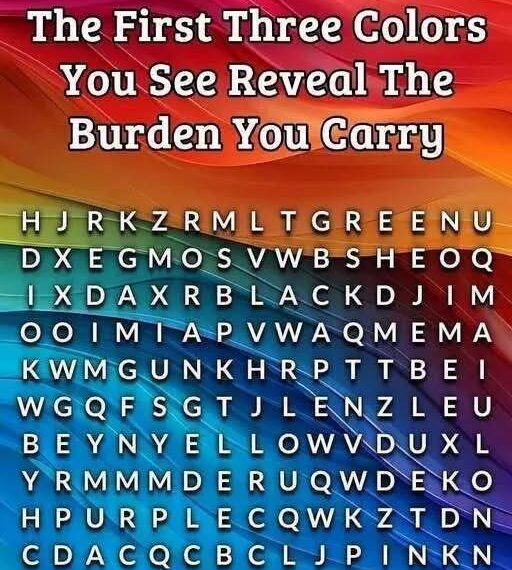
Why We Notice Certain Colors First
Several factors influence which colors attract our attention:
- Brightness and contrast: Vivid colors naturally stand out before softer shades.
- Personal memories: A favorite childhood toy, a sports team, or a meaningful event can create lasting associations with certain colors.
- Current mood: Someone feeling energetic may notice bold colors, while someone seeking relaxation may be drawn to cooler tones.
- Visual placement: Colors positioned near the center or against contrasting backgrounds often catch the eye first.
Because so many variables affect perception, two people looking at the same image may notice completely different colors.
A Simple Reflection Exercise
Instead of asking, “What do these colors predict about me?” try asking yourself:
- Which colors make me feel calm?
- Which colors energize me?
- Have my favorite colors changed over the years?
- What memories do certain colors bring back?
- How do I use color in my clothing or home to express myself?
These questions offer much deeper insights than any personality quiz ever could.
The Beauty of Color in Everyday Life
Color surrounds us every day, quietly influencing how we experience the world. Designers use it to create welcoming spaces. Artists use it to express emotion. Nature uses it to signal changing seasons, blooming flowers, and breathtaking sunsets.
Whether you prefer the peaceful feeling of blue skies, the warmth of golden sunlight, the richness of deep purple flowers, or the freshness of green forests, your favorite colors are part of your unique personal story.
Rather than trying to fit yourself into a predetermined description, enjoy color as a source of creativity, inspiration, and self-expression.
Final Thoughts
The image claiming that “the first three colors you see reveal the burden you carry” is best viewed as a fun conversation starter rather than a psychological assessment.
While color psychology offers interesting ideas about how different shades may influence emotions and preferences, no scientific evidence shows that noticing specific colors can reveal hidden truths about your personality or emotional state.
Still, there’s value in slowing down and reflecting. If thinking about colors encourages you to better understand your feelings, appreciate your experiences, or simply enjoy a moment of curiosity, then it has accomplished something worthwhile.
At the end of the day, the most accurate description of who you are doesn’t come from a color puzzle—it comes from the choices you make, the relationships you build, and the life you continue to create every single day.