Many people associate blue with peaceful environments such as oceans and clear skies, making it one of the world’s most popular favorite colors.
Green
Green is commonly linked with:
- Growth
- Renewal
- Balance
- Nature
- Healing
It often reminds people of forests, gardens, and fresh beginnings.
Yellow
Yellow traditionally symbolizes:
- Optimism
- Joy
- Curiosity
- Creativity
- Hope
Bright and energetic, yellow is often associated with positivity and enthusiasm.
Purple
Purple has long been connected with:
- Imagination
- Creativity
- Wisdom
- Individuality
- Personal transformation
Historically considered a color of royalty and luxury, purple continues to represent uniqueness and inspiration.
These interpretations aren’t rules—they’re simply symbolic meanings that many cultures have developed over time. For some people, a favorite color may evoke entirely different emotions based on personal experiences.
What Your First Three Colors Might Say About Your Current Mindset
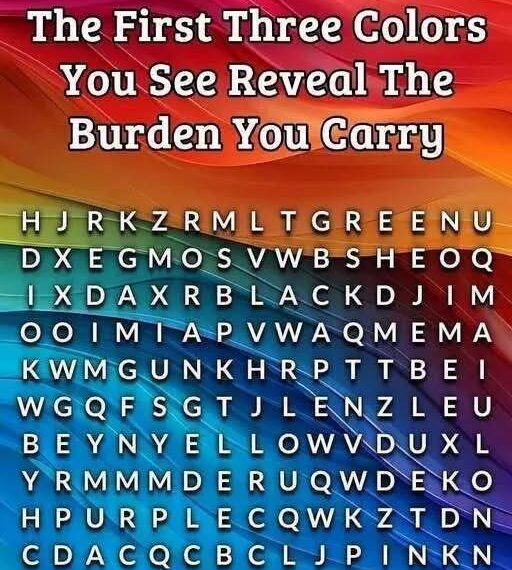
Although the image suggests that the first three colors you notice reveal the “burden you carry,” it’s better to think of the exercise as a fun personality reflection rather than a psychological test. Colors cannot diagnose emotions or determine your personality, but they can encourage meaningful self-examination.
The interesting part isn’t whether the interpretation is objectively true. It’s whether reading about a color encourages you to reflect on your own experiences.
If You Saw Red First
Red often symbolizes action, determination, and emotional intensity.
If red immediately caught your attention, you may be someone who throws yourself fully into responsibilities. You like solving problems, protecting the people you care about, and pushing through challenges instead of avoiding them.
The downside is that highly driven people sometimes carry invisible stress. They may feel responsible for everyone around them and forget to make time for themselves.
Reflection question:
“Am I carrying responsibilities that could be shared with someone else?”
If Blue Was One of Your First Colors
Blue is usually associated with peace, trust, and emotional stability.
People drawn to blue often appreciate calm environments and thoughtful conversations. They may act as the steady presence others rely on during difficult times.
However, those same qualities can sometimes lead people to suppress their own emotions while helping everyone else.
Reflection question:
“Do I spend as much time caring for myself as I do caring for others?”
If Green Stood Out
Green traditionally represents growth, healing, and renewal.
You may naturally focus on personal improvement or finding balance in life. Green often appeals to people who enjoy nature, learning, or creating peaceful environments.
At the same time, constantly striving for growth can create pressure if you feel you always need to improve.
See also Crayon Star Sun Catchers: A Colorful DIY Project for Sunny Windows
Reflection question:
“Can I appreciate how far I’ve already come?”
If Yellow Caught Your Eye
Yellow is often linked with optimism, creativity, and curiosity.
People attracted to yellow frequently enjoy new ideas, learning, and bringing positive energy into a room.
Even optimistic individuals, however, experience moments of doubt. Sometimes the brightest personalities work hard to hide worries behind a smile.
Reflection question:
“Do I allow myself to acknowledge difficult emotions as well as positive ones?”
If Purple Was Among Your First Three
Purple has long symbolized imagination, wisdom, and individuality.
Those who enjoy purple often appreciate creativity, meaningful conversations, and thinking differently from the crowd.
Because of this independent mindset, they may occasionally feel misunderstood or disconnected from others.
Reflection question:
“Am I giving myself permission to express who I truly am?”
Why These Quizzes Feel So Accurate
Many personality quizzes seem surprisingly personal because they describe qualities that many people experience at different stages of life.
Psychologists sometimes refer to this as the Barnum Effect, where people naturally recognize themselves in broad, positive descriptions.
That doesn’t mean the exercise is meaningless.
Instead, it shows how people enjoy reflecting on their own personalities when given thoughtful prompts.
Whether you immediately recognized yourself in one color or none at all, the exercise succeeds by encouraging self-awareness rather than predicting who you are.
A Better Way to Use Color Psychology
Rather than asking what a color says about you forever, consider asking what it represents right now.
Your favorite colors can change throughout life.
During stressful periods, you may find yourself drawn toward calming blues and greens.
During exciting new chapters, brighter colors like yellow, orange, or red may suddenly feel more appealing.
Our preferences often evolve alongside our experiences, making color less of a permanent label and more of a reflection of our current mindset and emotional landscape.
Looking Beyond the Colors: The Value of Self-Reflection
Color-based personality quizzes have remained popular for decades because they invite us to pause and think about ourselves. Even though science does not support the idea that the first three colors you notice can reveal your deepest burdens or predict your future, these exercises can still be surprisingly meaningful.
Sometimes, a simple prompt encourages us to ask questions we might otherwise ignore. Are we feeling overwhelmed? Are we craving change? Do we need more balance in our lives? If a color inspires those reflections, then the activity has already served a positive purpose.
It’s important, however, to separate entertainment from fact. Our personalities are shaped by countless influences, including our upbringing, relationships, experiences, values, and goals—not by the colors we happen to notice first in an image.