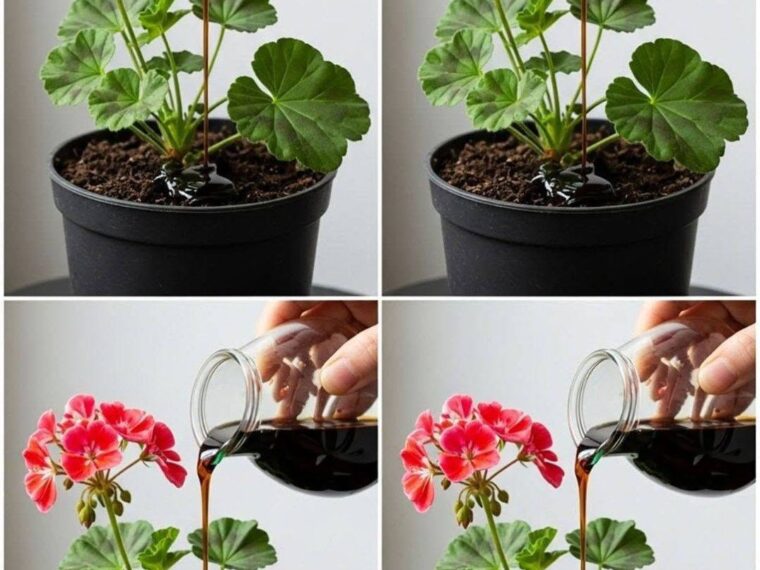
More is definitely not better.
Excess iodine can damage roots and negatively affect plant health.
If experimenting with iodine, use extremely diluted solutions and discontinue use if plants show signs of stress.
Deadhead for Continuous Blooms
One of the simplest ways to keep geraniums flowering is also one of the most effective.
Remove spent flowers regularly.
This process, known as deadheading, prevents the plant from directing energy into seed production.
Instead, that energy is redirected toward producing new buds.
How to Deadhead Correctly
Rather than removing only the faded petals:
- Follow the flower stem down to its base.
- Pinch or cut the entire stem away.
This encourages faster replacement blooms.
A few minutes of deadheading each week can dramatically increase flowering throughout the season.
Prune Leggy Growth
Even healthy geraniums occasionally become stretched or overgrown.
Midseason pruning helps maintain compact, bushy plants.
When to Prune
If stems become:
- Long
- Sparse
- Weak
trim them back by approximately one-third.
This stimulates:
- New branching
- Fresh foliage
- Additional flower clusters
Within a few weeks, plants often return fuller and more colorful than before.
Feed for Flowers
Geraniums are relatively heavy feeders when actively blooming.
Without adequate nutrition, flowering eventually slows.
Balanced Fertilizers
A balanced fertilizer such as:
- 10-10-10
can be applied every two weeks during active growth.
See also 7 Scents Snakes Hate: Natural Ways to Help Keep Snakes Away from Your Home
Bloom Boosters
Some gardeners prefer bloom-focused fertilizers such as:
- 15-30-15
These formulas contain higher phosphorus levels, which support flower production.
Always follow package directions to avoid overfertilization.
Overwintering Geraniums
In warm climates, geraniums may continue blooming throughout much of the year.
In colder regions, they can survive winter indoors.
Bringing Geraniums Inside
Before the first frost:
- Inspect plants for pests.
- Trim damaged growth.
- Move containers indoors.
- Place near a sunny window.
Indoor plants require:
- Less water
- Good air circulation
- Plenty of light
With proper care, many geraniums survive winter and resume vigorous flowering the following spring.
Common Mistakes That Reduce Blooms
Avoid these frequent problems:
Overwatering
The most common killer of container geraniums.
Excess Nitrogen
Too much nitrogen encourages leafy growth at the expense of flowers.
Ignoring Dead Flowers
Seed production steals energy from new blooms.
Crowded Roots
Plants that remain root-bound too long often flower less.
Insufficient Sunlight
Even excellent care cannot compensate for inadequate light.
Final Thoughts
Geraniums have earned their popularity for good reason. They are colorful, adaptable, relatively low-maintenance, and capable of producing months of continuous blooms when their basic needs are met.
The real secret isn’t a miracle ingredient or complicated gardening formula. It’s a combination of sunlight, proper watering, good drainage, regular feeding, and consistent maintenance.
Whether you choose to experiment with traditional gardening tricks like diluted aspirin or iodine solutions, the foundation of success remains the same: healthy roots, plenty of sunshine, and attentive care.
Give your geraniums those essentials, and they’ll reward you with a dazzling display of flowers that can brighten your garden from spring well into the cooler months.
Sometimes the most spectacular blooms come from the simplest habits practiced consistently.