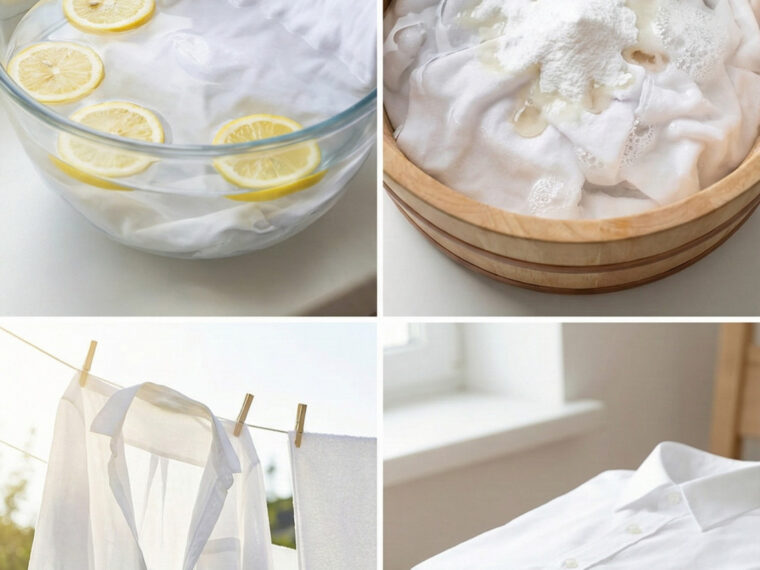
Why vinegar works:
It neutralizes odors and removes soap residue that can dull fabrics.
It brightens whites without harsh chemicals.
It helps soften fabrics, making clothes feel fresher.
It can even remove mild stains when combined with water.
How to Use White Vinegar for Laundry
Using white vinegar in your laundry routine is simple and doesn’t require special products or expensive additives. Here’s how:
Pre-Soak Method
Fill a basin or bucket with warm water.
Add one cup of white vinegar.
Immerse your white clothes and let them soak for 30–60 minutes.
Rinse thoroughly before putting them in the washing machine.
Washing Machine Method
Add ½ to 1 cup of white vinegar to the fabric softener compartment of your washing machine.
Wash as usual with your detergent.
The vinegar will help break down residues, leaving whites brighter and fresher.
Spot Treatment for Stains
Apply undiluted white vinegar directly to yellowed areas, sweat marks, or light stains.
Let it sit for 10–15 minutes before washing normally.
This targeted approach can revive old stains without bleach.
Additional Tips for Perfect White Laundry
To maximize the effect of vinegar and keep your whites looking like new, follow these extra tips:
Separate whites and colors: Washing whites with colored clothing can cause unwanted discoloration.
Avoid overloading the machine: Crowding clothes prevents them from rinsing properly.
Use warm water: Warm water helps dissolve detergent and vinegar more effectively.
Sun-dry when possible: Sunlight naturally whitens fabrics and helps remove lingering odors.
Avoid chlorine bleach on delicate fabrics: Vinegar is safer and gentler, especially on cotton, linen, or synthetic blends.
Why Vinegar Is Better Than Harsh Chemicals
While bleach can whiten fabrics quickly, it also has drawbacks:
Harsh chemical fumes can irritate skin and lungs.
Overuse can weaken fibers over time, reducing the lifespan of clothes.
Certain fabrics or dyes may be damaged by strong chemicals.
Continued on next page